

Catherine Ordronneau, piano; Kai Gleusteen, violin
Sunday, January 12 at 2pm
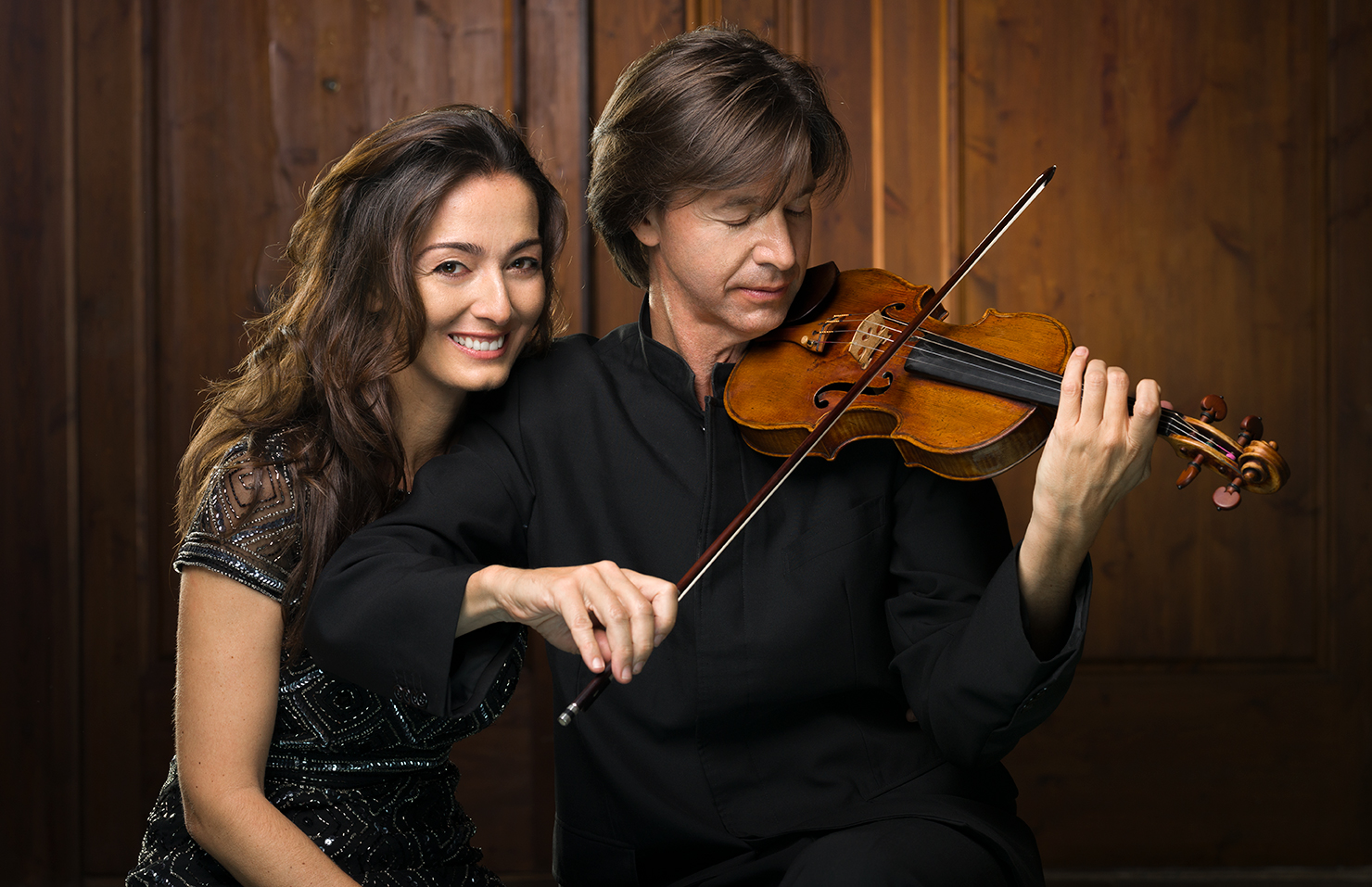
First working together in 1999, Kai and Catherine have established themselves as one of the most important duos in the interpretation of sonatas for violin and piano. Having performed more than 100 recitals in Europe, Canada and USA, they are praised for their unique partnership and the emotional power of their interpretations, and are described as playing as if under the control of a single intelligence.
Programme
Romanian Folk Dances, Sz. 56 — Béla Viktor János Bartók (1881—1945)
Joc cu bâtǎ. Allegro moderato
Brâul. Allegro
Pê-loc. Andante
Buciumeana. Moderato
Poargǎ româneascǎ. Allegro
Mǎrunţel. L’istesso
Mǎrunţel. Allegro vivace
Violin Sonata No. 3 in A Minor, Op. 25 — George Enescu (1881—1955)Moderato malinconico
Andante sostenuto e misterioso
Allegro con brio, ma non troppo mossoSonata in A major for piano and violin — César Auguste Jean Guillaume Hubert Franck (1822—1890)
Allegretto ben moderato
Allegro
Ben moderato: Recitativo-Fantasía
Allegretto poco mossoThree Preludes — George Gershwin (1898—1937)
Allegro ben ritmato e deciso
Andante con moto e poco rubato
Allegro ben ritmato e deciso
Background information
Since 1999 when they first began to work together, Kai Gleusteen and Catherine Ordronneau have established themselves as one of the most important duos in the interpretation of sonatas for violin and piano. Having performed more than 100 recitals in Europe, Canada and USA, they are praised for their unique partnership, “playing under the control of a single intelligence”, and for the emotional power of their interpretations.
In 2004, they were featured in the television program Classical Now, a nationally broadcast show, as well as a two-hour program on CBC radio in Canada including a live recital . They also received critical acclaim for the release of their first recording for the AVIE records label, which includes a “standout performance of the Prokofiev sonata, one of the finest on records.” In May 2004, their second recording with sonatas by Grieg, Dvorak, and Franck was distributed world-wide.
Their repertoire encompasses most of the great sonatas for violin and piano, as well as a myriad of short pieces representing the countries where they perform. Among recent projects was a tour in the USA with performances with the St Louis Symphony, recitals in Chicago as well as in the San Francisco area and gala concert in the prestigious Hotel de Ville of Paris.
Canadian born violinist, Kai Gleusteen started at the age of five years old in his native city, Calgary. Early on, he met with success in national music competitions in addition to receiving top academic awards. Already at a young age, he had the opportunity to study with the most renowned violinists and teachers of his time, including Nathan Milstein, Ivan Galamian, Josef Gingold, Dorothy Delay, and Zakhar Bron. By the age of seventeen, Kai was awarded the top prize in the Commonwealth Concerto Competition in Australia, he had received the prestigious Skene Award in Scotland and had formed his first chamber orchestra: The Group of Twelve.
A strong believer in the musician as a multi-dimensional human being, Kai chose to combine his musical studies with academic pursuits. At the University of Michigan, he studied anthropology, geophysics, and philosophy. He received a Master’s Degree from Rice University under the tutelage of the person who would become his greatest inspiration on both a personal and musical level, the violinist Camilla Wicks.
In 1991, Kai moved to Europe to live in the heart of Western Culture. Paris and Prague were his bases for nine years, allowing him to develop and perform both as a soloist and leader of numerous orchestras. In the year 2000, he won the concertmaster position of the Orchestra ‘del Gran Teatre del Liceu’ and subsequently moved to Barcelona. In 2003, he created the Gran Teatre del Liceu Chamber Orchestra and was appointed professor at the Escuela Superior de Musica de Catalunya. He continues to perform extensively as a soloist and a recitalist throughout Europe and North America and has released numerous critically acclaimed recordings.
Having performed her first recital at the age of twelve, it isn’t until the age of twenty, after two years of law school that Catherine Ordronneau decides to devote herself entirely to music.
Taught by Colette Fernier, Monique Deschaussées, Sergio Perticaroli, and encouraged by François-René Duchâble, she receives the highest distinction at the Conservatory in Rouen and later the prestigious Concert Award at the Ecole Normale Alfred Cortot in Paris.
Catherine is also awarded the Yvonne Lefébure Foundation Prize leading to television and radio broadcasts and concert engagements.
Catherine chooses to avoid the international competition circuit in favour of taking the time to study repertoire in its historical context. Being a great lover of nature, a fan of Marcel Proust and having spent many years in Normandy, she explores in depth the composers who were inspired by this region, such as Roussel, Debussy, and Saint-Saëns. She deepens her understanding of Beethoven, Schumann and Brahms with numerous trips to Germany, her knowledge of the language and by reading Goethe and Heine. Her interpretation of Chopin is nourished by the time spent in Poland and a close examination of his letters. She delivers “mesmerising performances in which her ability to summon a myriad of colour is allied to a total artistic integrity”. (The Times)
Catherine’s approach to music is very much appreciated not only by solo piano audiences throughout Europe and North America but also by various renowned chamber musicians. She is invited to perform in music festivals throughout these countries and devotes a large part of her time to the duo with Kai Gleusteen and the Trio Liceu.
 Chemainus Classical Concerts